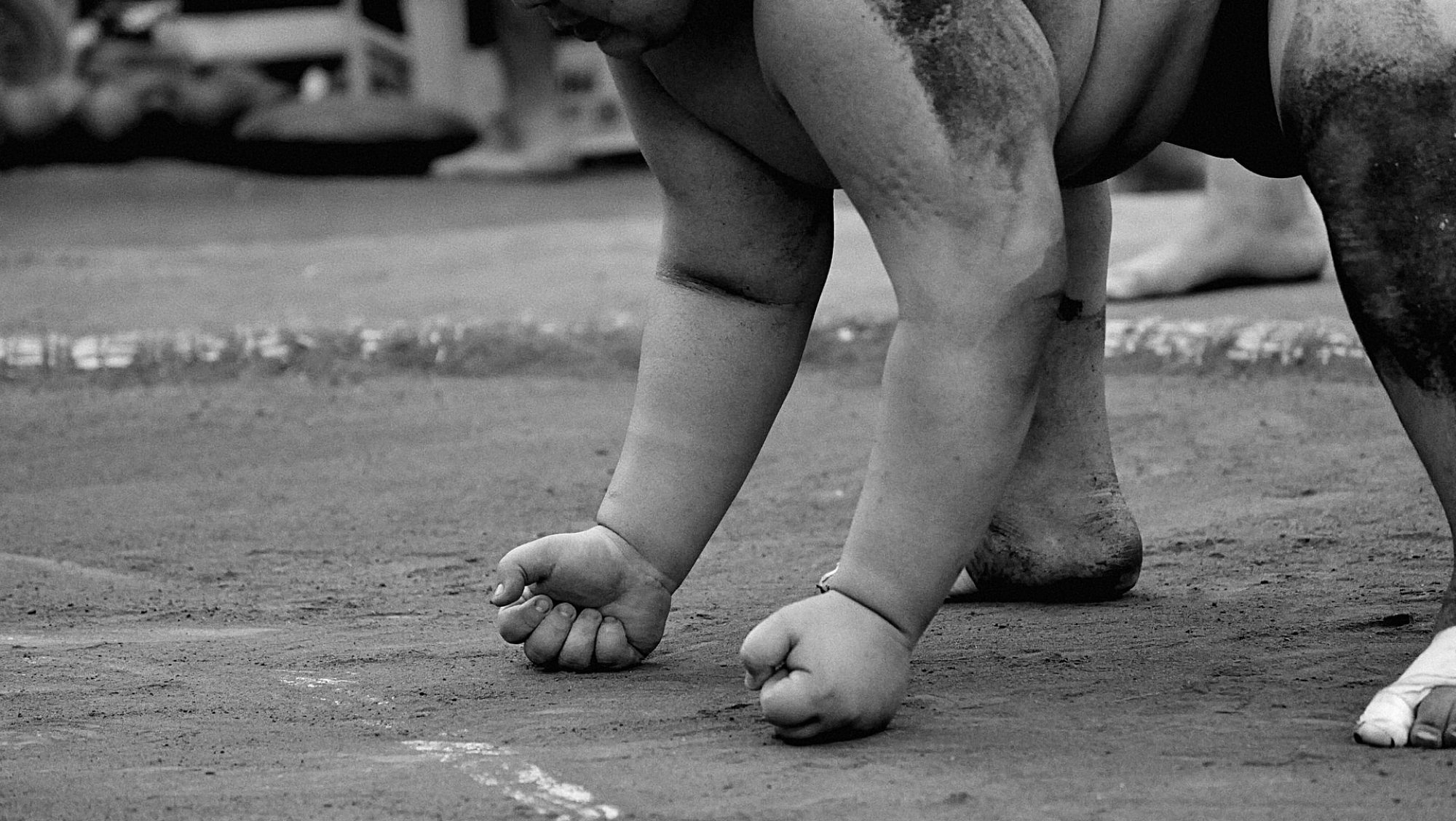
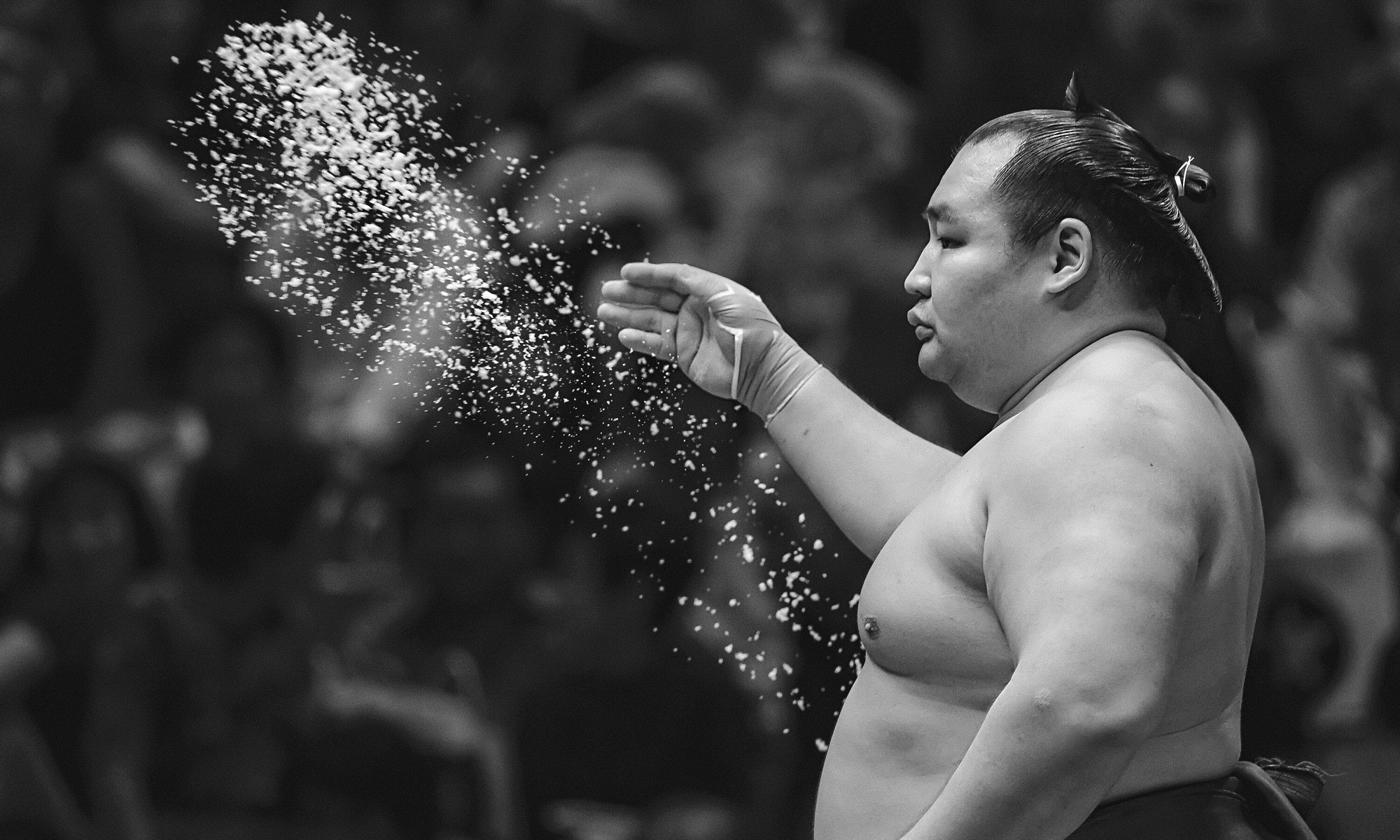
The first time I watched Chiyonofuji walk to the dohyō as Yokozuna, I saw Akashi Shiganosuke a half-step behind him, and every yokozuna between them. The same movements, the same stance, salt thrown with the same intention from the 1600s to now. A living language, still telling its story — for those who care to listen.
Not a Sport. Not Simply a Tradition. Both.
The Japan Sumo Association (JSA, or Nihon Sumo Kyokai) describes sumo as a kokugī, loosely translated as ‘national sport.’ But that translation loses something. Koku is nation; gi is closer to art, or craft, or practice. Sumo is a national practice, and it carries the weight of that designation seriously: its governance falls under the jurisdiction of Japan’s Ministry of Education, Culture, Sports, Science, and Technology. It is simultaneously a competitive athletic discipline, a Shinto ritual form, a bureaucratic institution, and a commercial entertainment product. And the tension between those four identities is where most of the interesting things happen.
The mythological origin of sumo appears in the Kojiki (古事記, 711–712 AD), Japan’s oldest chronicle, where two gods, Takemikazuchi-no-kami and Takeminakata-no-kami, wrestle for sovereignty over the Japanese archipelago. The first human match recorded in the Nihon-shoki dates to 23 BC, when Emperor Suinin summoned Nomi no Sukune to defeat Taima no Kuehaya, a man who had publicly declared himself the strongest alive. The match was lethal. Nomi no Sukune is considered sumo’s founder.
These origin stories matter not only in an historical context, but also as institutional identity. Any organization rooting itself in divine contest and imperial patronage is making an intentional and specific claim about its own authority, one it has defended, with varying success, for over a millennium.
Institutional Architecture
To follow sumo at any depth, you need to understand the heya system, and to understand it properly, you need to resist the translation most commonly offered in Western sources.
Heya is usually rendered as “stable” or “gym.” But both are wrong in the same direction: they reduce it to a training facility. A heya is a community of residence. Wrestlers live there. They sleep, eat, and train in the same building, often for years, sometimes for their entire careers. The heya is managed by two figures whose roles are complementary and non-interchangeable, the shishō and the okami-san.
The shishō is an oyakata, a retired wrestler who has purchased or inherited a share in the JSA’s governing structure and now holds institutional responsibility for his stable’s athletes. While often considered a ‘head coach,’ it’s not a coaching role in the Western sense. The oyakata shapes not just technique but conduct, public comportment, as well as the transmission of sumo’s moral code to the next generation of wrestlers. The expectation is that high-ranking wrestlers will become role models and, in time, oyakata themselves.
The okami-san is the oyakata’s wife, and her role is as institutionally significant as his, if less visible externally. She manages the heya’s domestic administration, mentors younger wrestlers in the practical demands of communal life such as cleaning, cooking, maintenance. She also often serves as the emotional infrastructure of the stable. Okami-san is not a peripheral figure.
Within the heya, hierarchy is rigid and rank-determined. Newer, lower-ranked wrestlers handle maintenance and meal preparation for their seniors. The banzuke, the official ranking sheet published before each of the six annual tournaments, governs daily life inside the heya as much as it governs who fights whom on the dohyō. For example, a nineteen-year-old already ranked in juryo (the second division) outranks a thirty-year-old still in the lower divisions. It’s a dynamic that requires careful management and can be, understandably, a source of friction.
A heya also houses the gyōji (referee), the yobidashi (ring attendants who prepare the ring, carry the banners, and announce bouts), the tokoyama (topknot stylists), and lower-level administrative figures, including the sewanin and wakaimonogashira. They all live and work within the same structure.
From the stands, sumo appears as a sport that happens in an arena a few days a month. But in reality, it’s a continuous institutional existence.
JSA: Governance, Power, and Contradiction
The Japan Sumo Association traces its institutional lineage to the Daimyō, feudal landowners who financed tournaments and sponsored wrestlers during the Edo period (1600–1868). The modern organizational form consolidated in 1927 with the merger of the Tokyo and Osaka sumo associations into the Greater Japan Sumo Association. It took its current name between 1966 and 1969 and has operated in its present structure since.
The JSA is governed by oyakata, creating a structure which produces a supervisory body that is, by design, composed of people who came up through the system they now govern. The advantages of this structure are obvious: deep institutional knowledge, genuine investment in sumo’s continuity. The disadvantages are equally predictable: insularity, inconsistent enforcement, and the tendency to protect internal hierarchies over external accountability.
The JSA’s disciplinary record illustrates this clearly. When violations occur (these can include violence within a heya, conduct unbecoming a yokozuna, match-fixing), the association’s responses have ranged from exemplary to inexplicable, often depending less on the severity of the infraction than on the institutional standing of the person involved.
An example of this can be found in the asymmetry of two recent cases involving heya violence. When Miyagino stable, led by former yokozuna Hakuho, faced discipline following incidents involving wrestler Hokuseiho, Hakuho’s heya was temporarily closed, and he was demoted to the lowest oyakata rank.
When Naruto stable, led by former ozeki Kotooshu, faced comparable allegations of violence and cover-up, the penalties were considerably lighter.
The JSA offered no public accounting of the discrepancy.
Asashoryu’s dominant era in the mid-2000s was marked by near-total competitive superiority, yet the JSA never fully accommodated him. His conduct was exuberant, occasionally defiant, and in affect, visibly non-Japanese. His behavior fell outside what the organization was willing to tolerate at the sport’s highest rank. He was eventually pressured into retirement in 2010 following a physical altercation, despite a competitive record that would have sustained continued tenure under different circumstances. Fellow Mongolian yokozuna Harumafuji was also forced to retire in 2017 after striking a younger wrestler at a social gathering. The JSA treated the act as disqualifying. For a yokozuna, conduct beyond the ring is not a private matter.
For two decades, sumo’s global competitive talent pool has been dominated by foreign-born wrestlers, predominantly Mongolian, while the cultural and governance apparatus remains rooted in a Japanese institutional identity that those wrestlers are expected to inhabit completely.
What History Tells Us About the Present
Sumo almost didn’t survive the Meiji era (1868–1912). Modernization ideology branded it primitive. New public decency laws targeted the wrestlers’ near-nudity. Serious intellectual voices were calling for the wholesale replacement of Japanese culture with European forms. It took a single imperial appearance to save it: Emperor Meiji attended a tournament in 1884. His single act of patronage secured state legitimacy for sumo at a moment when legitimacy was the only thing that could protect it.
In 1925, Crown Prince Hirohito attended a tournament and endorsed the creation of the Emperor’s Cup, which remains the sport’s premier trophy.
In 2019, at the explicit request of Donald Trump during a state visit, a U.S. President’s Cup was awarded. It was sumo doing what it has often done: functioning as a vehicle for diplomatic signaling.
Sumo’s labor history is rarely discussed in English-language coverage but is essential. Wrestlers have organized, gone on strike, and even been expelled for demanding better conditions since at least the Meiji era.
In 1932, the Shunjuen Incident saw nearly the entire makuuchi division walk out, including most of the san’yaku (the elite, upper-ranking sumo wrestlers), over pay and working conditions. The banzuke was restructured with lower-division wrestlers promoted to fill the gaps, and the organizers were expelled. The institutional memory of that event shapes how the JSA has managed internal dissent ever since.
The 2011 match-fixing scandal was the most serious crisis in the modern association’s history. Evidence of systematic yaochō (fixed bouts) led to the cancellation of the March tournament, only the second time in the postwar era that a scheduled tournament had been canceled, and the expulsion of multiple wrestlers and oyakata. The scandal confirmed what many observers had suspected for years: that the JSA’s self-governance model was structurally unsuited to policing integrity violations within its own membership.
Moral Code as Institutional Instrument
Under sumo’s explicit moral framework, wrestlers are expected to embody hinkaku, a quality roughly translatable as dignity or deportment, both inside and outside the arena.
This expectation is varied in accordance to rank with yokozuna being held to a higher standard of conduct than lower-ranked wrestlers. The underpinning logic is explicit: the highest rank carries a representative function that is inseparable from behavior in ordinary life.
This framework functions simultaneously as both genuine cultural transmission and a mechanism of institutional control. A yokozuna who violates hinkaku can be pressured to retire without a formal disciplinary process, the standard being subjective by design. The Yokozuna Deliberation Council (横綱審議委員会), established in 1950, exists in part to manage promotions and departures in a way that keeps the most politically sensitive decisions at arm’s length from the JSA’s internal governance.
An oyakata is responsible not just for his wrestlers’ technique but for their conduct. Cover-up of internal misconduct is treated, in principle, as an aggravating violation rather than a mitigating one. In practice, heya disputes are resolved quietly, the JSA’s visibility into individual stables is limited, and the distance between stated principle and actual behavior is where most of sumo’s scandals are born.
What You’re Watching When You Watch Sumo
A basho runs for fifteen days. There are six per year, across Tokyo, Osaka, Nagoya, and Fukuoka. Each wrestler in the top two divisions fights once daily, accumulating wins and losses across the full fifteen days. Eight wins maintains or advances rank. Anything less risks demotion.
The banzuke is reissued before each tournament. Reading it carefully tells you almost as much about the state of sumo as watching the matches.
The dohyō, the raised clay ring, is itself a ritual object. Constructed fresh before each tournament, it contains offerings (dried cuttlefish, kelp, chestnuts, squid, salt) buried beneath the surface as part of a Shinto consecration ceremony. The circle is 4.55 meters in diameter, a measurement that has been defended against modification by wrestlers twice in the twentieth century, once under Allied occupation, when the ring was widened and then restored after protest.
The pre-match ritual, including the salt throws, shikō (the leg stomps), sonkyō (the extended crouching and staring), the false starts, is not theater in the pejorative sense. Rather, it’s the formalization of combat as ritual, transforming two large men on the cusp of collision into participants in something older than the arena around them.
Sumo Has Traveled
Hitachiyama took it to the United States in 1907. London hosted bouts in October 2025, and next month (June 2026) will find sumo in Paris. Both exhibition events occurred at moments of active diplomatic engagement between Japan and its European partners.
In April 2026, JSA chairman Nobuyoshi Hakkaku, himself a former yokozuna, was awarded the Freedom of the City of London in recognition of his role in facilitating London’s Royal Albert Hall tournament.
This type of honor doesn’t go to sports administrators; it goes to people governments want to acknowledge formally. Whether the JSA understands itself as a soft power instrument is a separate question from whether it functions as one.
At 100 years old in its current form, sumo has survived modernization, world war, occupation, match-fixing scandals, and two decades of foreign dominance at its highest competitive rank. It has done so the way any living language survives: by remaining in use. The form established in the eighth century is still being spoken, still being argued over, still absorbing new vocabularies while discarding others. They are still having the conversation. And it is a continuing dialogue that rewards anyone who takes the time to learn to read it.
 Freedom Ahn