Why Japan Is Sending Sumo to France

Japan almost never sends sumo abroad. That it chose London after the UK RAA, and Paris during France RAA negotiations, is hard to read as coincidence. The timing is heavily suggestive of dohyō diplomacy.

When sumo returned to London in October 2025 after 34 years, the international coverage showed Yokozuna Hoshoryu and Onosato posing with junior-ranked rikishi (wrestlers) in front of Buckingham Palace and even enjoying hot dogs from a street vendor along the River Thames in front of the Houses of Parliament. The footage was widespread on every social platform in most markets. Almost nobody wrote about the date. The UK-Japan Reciprocal Access Agreement had entered into force two years earlier. Next month, sumo performs in Paris as France and Japan negotiate their own RAA

Sumo’s governing body, the JSA (Japan Sumo Association), is deeply tied to Japanese state ceremony, from the Emperor’s Cup – the Prime Minister’s Cup has been awarded at top-division championships since 1968 – to the consecrated dohyō. This institutional architecture makes exporting sumo a state act, not merely a sporting one.

Sumo rarely hits the road

London’s Royal Albert Hall appearance in October 2025 was the first overseas tour in roughly twenty years. The association treats international appearances with a restraint that makes each destination legible as a choice rather than a schedule. 

At the December 2024 press conference at Royal Albert Hall announcing the tour, JSA chairman Nobuyoshi Hakkaku, who had won the last London tournament in 1991 under his wrestling name, Yokozuna Hokutoumi, said he would make every effort to “convey to the people of London the appeal of sumo, an ancient traditional Japanese culture.” Six months after the London tour, the institutional dimension was made formal. 

On April 24, 2026, the City of London awarded Hakkaku the Freedom of the City.  The Japanese Embassy’s Deputy Head of Mission, Masaki Ikegami, attended. Hakkaku refused to take personal credit. He said it was an honor but not an individual accomplishment, rather one that “owes much to everyone’s contributions to sustain the Japanese traditions and culture of Grand Sumo.” 

The Freedom of the City ceremony came just three weeks after the Macron-Takaichi Tokyo summit and seven weeks before the Paris tour.

France-Japan RAA negotiations were launched at the Kishida-Macron bilateral summit in May 2024. Macron just returned from Tokyo last month, where the summit advanced the bilateral relationship across security and cultural lines. Six weeks later, sumo follows. The narrative indicates that sumo tours function as soft-power signals. 

France itself has historical precedent for this reading. The last time sumo wrestling visited France was in 1995, under President Jacques Chirac. Chirac, a known fan of sumo, was also the politician who hosted an earlier tour in 1986. (President of France: 1995-2007; Prime Minister of France: 1974-1976, 1986-1988; Mayor of Paris: 1977-1995.)

France has Indo-Pacific interests that make it a meaningful partner for Japan in security terms. Its 2025 strategy is built around sovereign territory and naval capacity in the region. Joint Franco-Japanese exercises have been conducted on Japanese soil. The RAA under negotiation would simplify the movement of forces and equipment between the two countries and move France closer to the small group of Japan’s closest bilateral security partners, which currently includes the United States, the UK, Australia, and the Philippines.

RAA is not yet signed

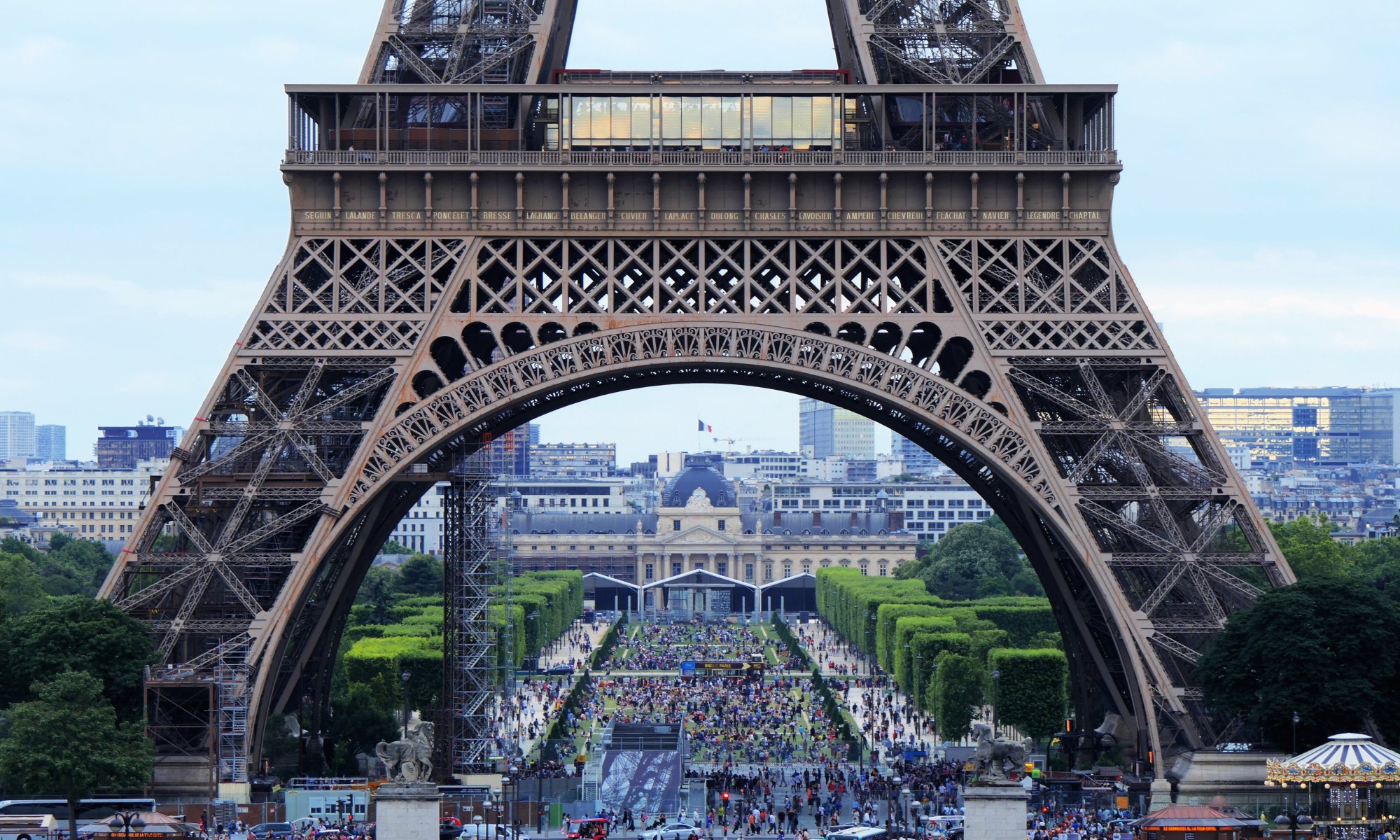
The dohyō that will be built at the Accor Arena for the June event will be prepared according to the same strict ritual protocol as in Japan, local clay consecrated by the same ceremony, carrying the institutional form of sumo intact onto Parisian soil. The question worth considering is why Japan has chosen this moment to send sumo abroad, something it almost never does.

Event organizers are describing the tournament as a chance for spectators to “immerse themselves in Japanese culture” and to celebrate France-Japan friendship. Commercially, that’s the perfect framing. Politically, it’s something else entirely.
Notes from the Spring Tour, Before the Basho Opens

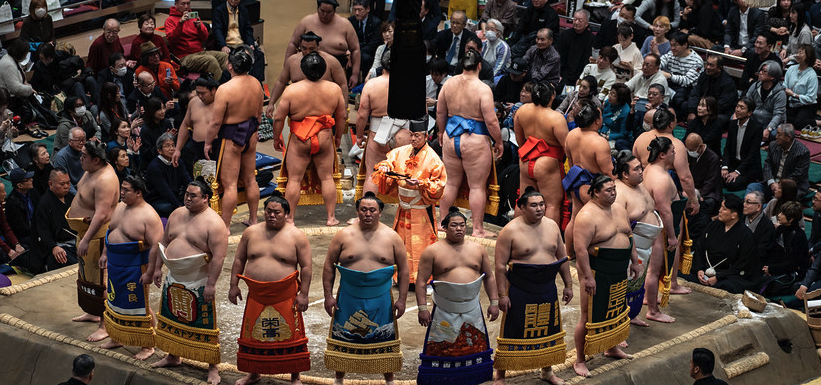
The jungyo, sumo’s travelling road show, spans 29 days across 27 locations, starting with ceremonial sumo at Ise Grand Shrine and ending in Saitama the week before the basho opens. Wrestlers pile onto buses, practice in borrowed gymnasiums, sleep communally, and take hundreds of bouts against each other with no rankings at stake and no Emperor’s Cup on the line. From the outside it looks like nothing more than exhibition sumo. But the jungyo is where you find out who is actually ready, who is managing something they haven’t disclosed, and who is doing the quiet work that doesn’t show up until Day 8 of the basho.

The 2026 Haru Jungyo ran from April 18 to April 26. The Natsu Basho opens May 10 at the Kokugikan. Here is what the tour revealed.

Twenty-Nine Days, One Yokozuna

As the sole yokozuna on the spring tour, Hoshoryu set the physical standard that everyone else measured themselves against across all 29 days. He led from the front, took the most bouts among the upper ranks, and gave the circuit whatever weight it had at the top.

At the April 19 stop in Utsunomiya, he took a tour-high 16 bouts, going 15-1. He called out Wakanosho, a local wrestler from Utsunomiya on the verge of his Makuuchi debut, for repeated practice bouts, going 7-1 against him. He also served as the receiving partner for butsukari-geiko, the punishing full-contact pushing drill, for several minutes, a gesture that drew sustained applause from the crowd. Hoshoryu said afterward he hadn’t known Wakanosho was local until he stepped onto the ring, but that if the fans were happy, that was enough.

By the final day in Iruma on April 26, with the 29-day circuit complete, Hoshoryu gave his end-of-tour assessment. With both Yokozuna Onosato and Ozeki Aonishiki having withdrawn from the tour due to injury, he had carried the top of the division alone. “Above all I’m glad to have finished safely without injury,” he told reporters, per Kyodo ( via Tokyo Shimbun and Okinawa Times). “My physical reactions were good. I’ll prepare for the Natsu Basho.” For a yokozuna heading into his first title shot of the year, that is a clean bill of health delivered in the most understated register possible.

Kirishima At 30

On April 24 in Saitama, Ozeki Kirishima turned 30 and spent the morning taking 14 practice bouts, going 4-4 in eight consecutive bouts against Hoshoryu, who called him out. The two men trained in the same Mongolian judo dojo as children, a fact that gives their matchups a texture that most jungyo bouts don’t carry.

“This is my best age,” Kirishima told reporters, per Daily Sports (Kyodo). “I think there’s still more strength to come.” The session with Hoshoryu was unplanned: “My body was moving well. I’ll carry this into the next tournament.”

He returns to Ozeki after exactly two years away, a rank he lost to injury and clawed back through three consecutive positive-record tournaments. The mentor who originally bore the name Kirishima reached Ozeki at 31. The current Kirishima is 30, back at the rank, and by his own account feeling the sharpest he has in years. The reporters covering the tour noted he received a cake from the press pool for his birthday. He was photographed holding it, smiling. It is a small detail about a man at the top of his institution, two years after being forced out of it, visibly at ease.

Ura, patiently

Over 24 days of the tour, excluding two days of ceremonial sumo, Ura did not miss a single moshiai session, according to tour staff (Kyodo via Shimotsuke Shimbun and Akita Sakigake). He is 33, has lost 22 of his last 31 matches, and spent every available practice session on the dohyo anyway.

At the April 23 stop in Fuchu, Tokyo, he took 18 bouts against Atamifuji and others, using a shoulder throw to send the younger wrestler tumbling, his technical precision intact even as his record over the past two tournaments tells a different story.

He explained his tour routine to reporters: eight hours of sleep, up at 6am, two hours before departure. “I want to be wide awake and have my body moving by the time I arrive,” he said. “But I don’t want to be a slave to routine. I want to stay flexible.” His quote on the practice itself was simpler: “I am grateful just to be able to practice.”

Someone in comfortable form doesn’t talk about being grateful just to practice. Ura knows exactly where he is, and he’s decided to work through it rather than around it. Whether that produces a comeback at Natsu Basho or a quiet slide further down the rankings, the effort is real and the tour made that visible.

Asanoyama, deliberate

Former Ozeki Asanoyama spent the first portion of the tour on basic conditioning before joining moshiai on April 20 in Ibaraki, finishing his first competitive session 8-4 and working primarily on left overarm grip and strong initial contact. 

By April 21 in Adachi, Tokyo, he was taking bouts against Atamifuji and others, finishing 8-4 over 12 bouts. He practiced without a supporter on his chronically injured left knee, taping only. Of Atamifuji he said: “He’s getting heavier. Practicing with Sanyaku wrestlers is good, and working with younger wrestlers will change me,” per Daily Sports. His goal for Natsu Basho was direct: “I haven’t managed double-digit wins since returning to Makuuchi. That’s the number one target. My starts are always bad — I want to fix that,” per the same report.

He has finished with a winning record in two consecutive tournaments since returning to Makuuchi and wants to be back in Sanyaku by year end. The tour suggested that ambition is grounded in something real.

The newcomer

Fujiryoga, newly promoted to Makuuchi and on his first jungyo, spent April 22 in Ota, Tokyo, throwing himself at Ozeki Kirishima for two minutes of butsukari-geiko, repeatedly driven to his knees, back covered in dirt. “It’s a luxury for a newcomer like me,” he said. “It’s tough, but I’m nothing but grateful. I want to reach a level where I can compete equally with Yokozuna and Ozeki soon,” per Nikkan Sports.

His mentor, Fujishima oyakata, the former Ozeki Musoyama, arrived partway through and watched from ringside. Fujiryoga said he felt “a little mentally fatigued” compared to usual, but added: “He is someone who embodied the powerful pushing sumo I aspire to. Since he came to watch, I wanted to show him good sumo.” His mentor had come to watch, and he wanted to show him something worth seeing.  In sumo, that’s not insignificant.

What it means for May 10

The banzuke was published April 27. Hoshoryu and Onosato hold the Yokozuna positions, though Onosato sat out the spring tour managing an injury and has not won a title in three tournaments. Kirishima returns to Ozeki. Two Ozeki are carrying physical damage into the basho. The new Sekiwake slots belong to Atamifuji and Kotoshoho, the former the first wrestler from Shizuoka Prefecture to hold that rank in 96 years, the latter among the ten slowest climbers to Sekiwake in recorded history.

The tour did not resolve the title race but it did clarify the physical inventory. Hoshoryu is fit and has been working at full load for 29 days. Kirishima is sharp and apparently unbothered by the occasion of turning 30. Asanoyama is moving without the knee brace and thinking about Day 1. Ura took every available practice bout and is due for something to break his way.

The Natsu Basho opens May 10. The Emperor’s Cup is open.


All sources used in this piece are linked inline. All Kyodo wire quotes are attributed to the regional papers that carried the wire report, as the originating Kyodo dispatches are not separately accessible without a subscription. Where articles are behind paywalls, the link is provided for reference and attribution purposes.