The Project
This site documents my ongoing research for a project exploring a deceptively simple question: what if form is not merely the container of meaning, but the mechanism by which institutions speak?
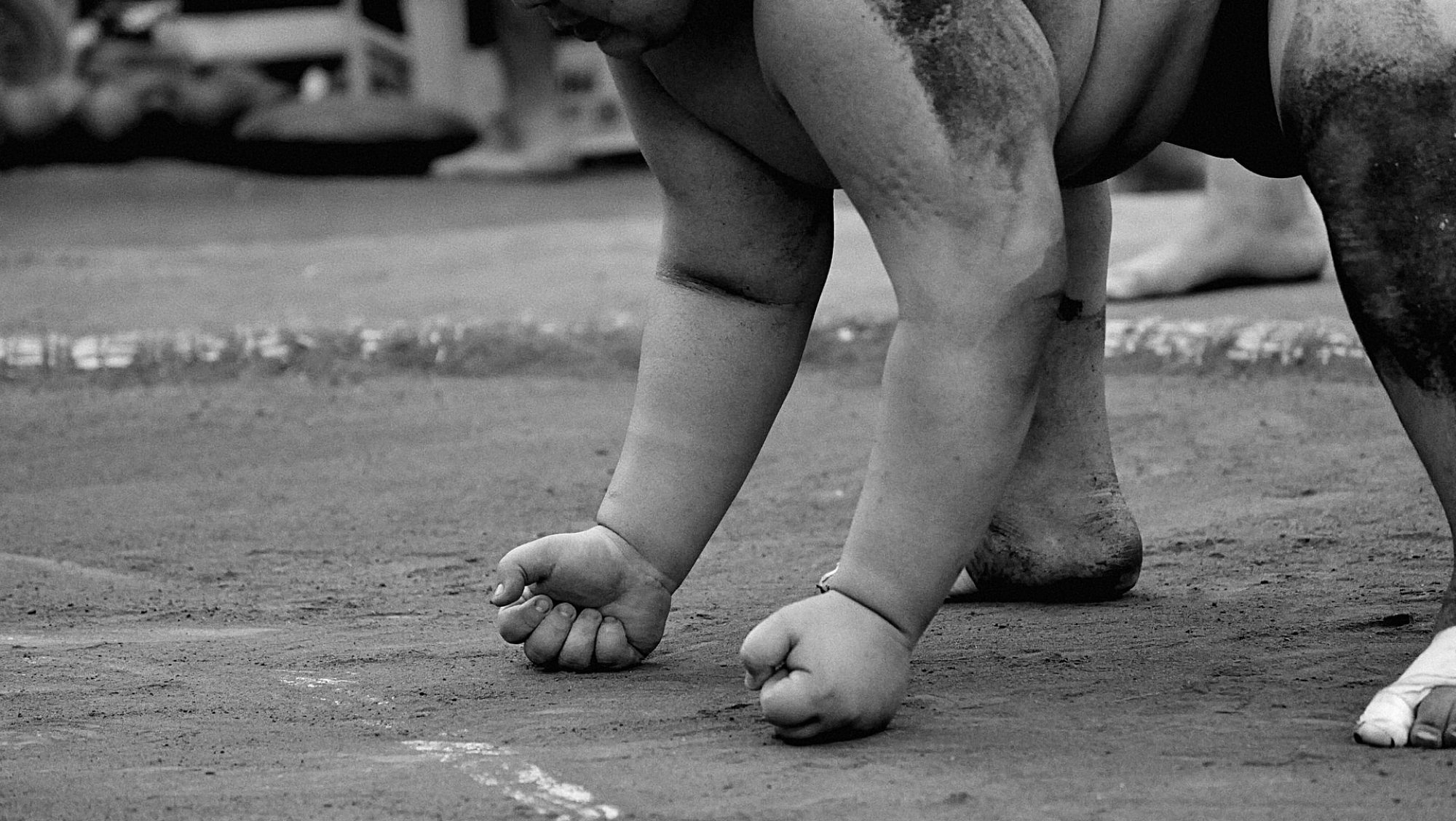
The primary site of inquiry is sumo. I examine Japan’s oldest continuously practiced institutional form as a semiotic system, rather than through the more common lenses of sport or spectacle.
The Argument
Is that sumo’s rituals, hierarchies, spatial arrangements, and bodily practices constitute a language in a precise, technical sense, i.e., a structured system of signs in the Saussurean tradition that generates and transmits social meaning across centuries. When a yokozuna performs the dohyō-iri, or a gyōji bears a tantō, they are speaking in a grammar nearly one and a half millennia old.
The broader claim is that sumo is one particularly legible instance of a phenomenon found throughout Japanese institutional life: the deliberate cultivation of form as a mode of authority. Where coercion is unavailable, form substitutes for it; where coercion is undesirable, form is the strategic preference.
Why It Matters
Institutions that govern through form rather than force are, in many respects, more durable than those that do not. The Japan Sumo Association (JSA; Nihon Sumo Kyōkai) has survived numerous challenges, including modernization, wars, a match-fixing scandal, and the rise of non-Japanese wrestlers who have dominated the sport for over three decades, even reaching the top rank of yokozuna, while remaining, in its formal architecture, essentially unchanged. The legitimacy of sumo is performed rather than argued, indexed by the persistence of its forms. That continuity is its own justification
My research operates at a three-point intersection of semiotic anthropology, linguistic anthropology, and the cultural history of Japanese institutions. The Saussurean frame describes the structure, i.e., a system of signs organized as grammar. The Peircean concept of indexicality explains the mechanism, i.e., each form points toward and constitutes the social authority it appears merely to reflect. I draw on the linguistic anthropology of Agha, Silverstein, and others who have theorized how registers and forms of embodied practice accumulate and transmit social authority over time. Together these frames allow me to read sumo as meaning that happens to take the form of a sport rather than as a sport that happens to carry meaning.
The Book
The current research is directed toward a book in two movements, examining sumo as an institutional language, a structured system of form through which an institution generates and sustains its own authority. The first movement examines sumo’s institutional interiority, specifically the banzuke, the moral code of hinkaku, and the governance architecture of the JSA. The second follows that language abroad, to the moments when it has been asked to perform for audiences who do not share its grammar.
This research is conducted independently. For inquiries, collaboration, or access to working papers, please get in touch
 Freedom Ahn