Natsu 2026: Hoshoryu’s Sudden Injury and the Sumo Injury Crisis

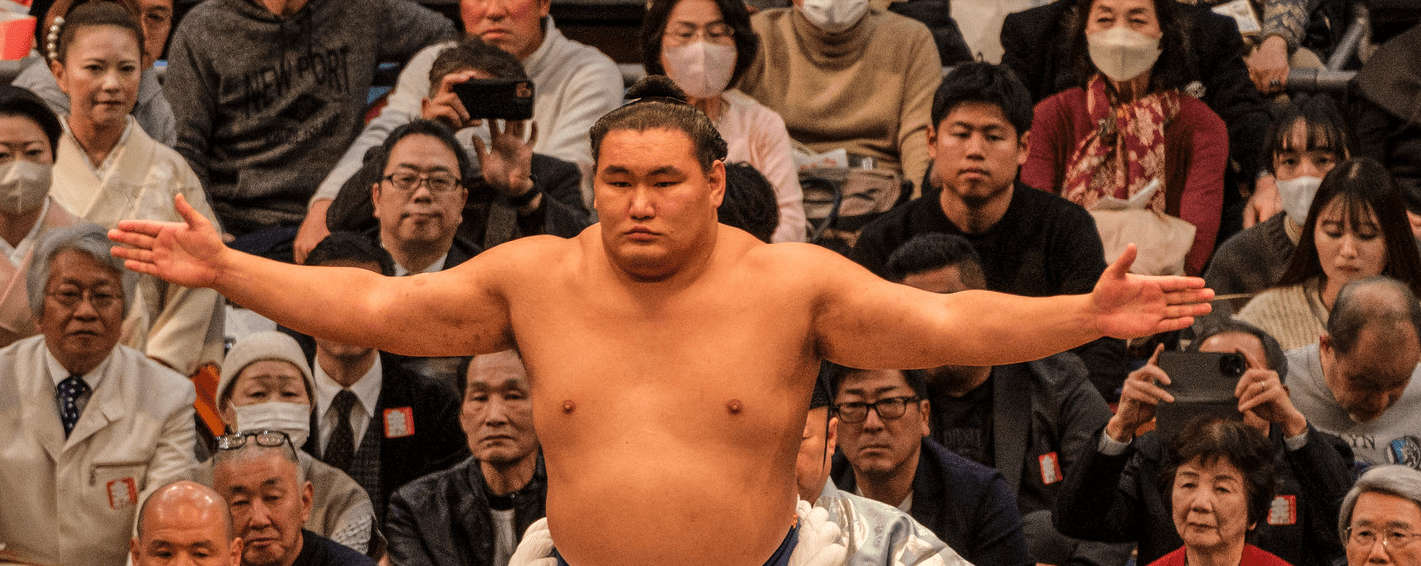
Yokozuna Hoshoryu

I came to Day 1 footage from the Ryogoku Kokugikan already knowing Hoshoryu was injured. I’ve been sidelined with a cold for much of the week, but that much had reached me before I sat down to watch.

Hoshoryu versus Takayasu is always musubi no ichiban (結びの一番) for me, regardless of where it falls in the card. Their chemistry, power, the mutual intensity, the history between them, the balance, it all makes for the very best of sumo every single time. I’ve watched some explosive meetings between these two at the Natsu basho and elsewhere. While Saturday’s bout wasn’t among their most dramatic (like March’s final pairing), it was one of the more painful ones I’ve seen. Hoshoryu’s face got me. Hard.

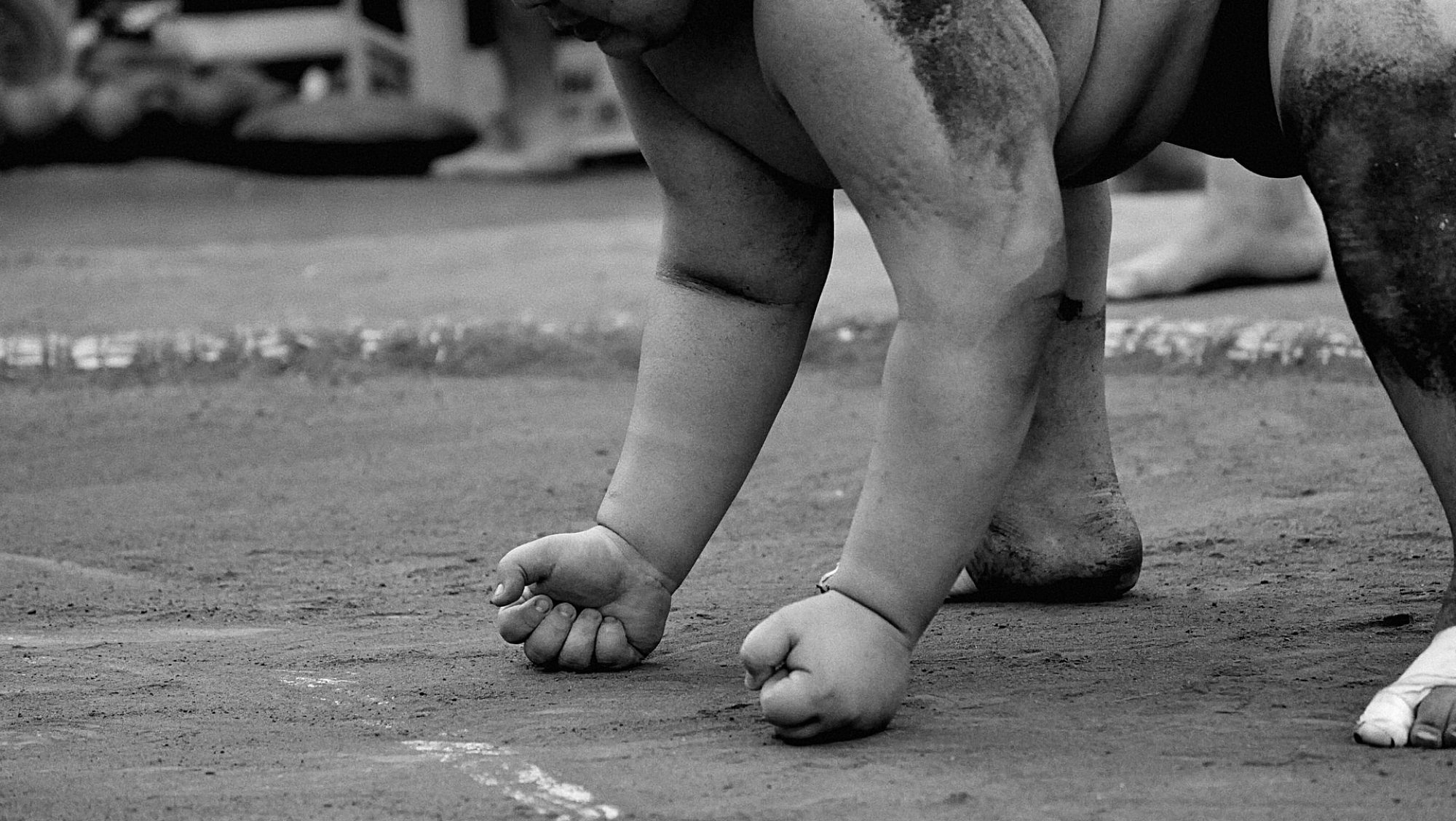
The moment Hoshoryu went down, something flashed across his features that every athlete who has been seriously injured in competition will recognize immediately. It’s more than the surprise of losing. It’s something colder and more total, an instant, all-knowing awareness of what might have just happened and what it might ultimately cost. The questions start running in a loop: How bad am I? How quickly will I get back? What have I just lost? Has everything just ended? These hit you like lightning. Then comes the moment you choose to move the injury. I don’t care how much of an entertainer someone is; you don’t perform that face.

Any athlete who’s trained for most of their life –I’m a second degree (albeit dusty) blackbelt in TKD–and has been hurt badly enough will recognize it instantly, without commentary.

Natsu 2026 Tachiai

The Natsu 2026 basho opened on May 10th with the upper ranks already showing strain. Onosato is out with a persistent shoulder problem. Newly minted Ozeki Aonishiki is out with a broken toe. Hoshoryu stood as the sole Yokozuna. His was the single body carrying the symbolic weight of sumo’s highest rank into the Summer basho. He lasted one match.

By Day 2, the throne was empty.

What Hinkaku Costs 

In sumo, the yokozuna rank sits above ordinary competitive hierarchy. It carries hinkaku (dignity, bearing), that quality of presence expected to be visible in everything a grand champion does, inside the dohyō and out. A yokozuna reigns.

Unlike the ozeki, a rank below him, a yokozuna can’t be demoted for a losing streak. Retirement comes through persistent absence, conduct that undermines the dignity of the rank, failure to embody what the title demands. The JSA awards the yokozuna rank as an honor and the men who hold (or have held) the rank understand the weight of what it actually is.

The rank of yokozuna chooses athletes of extraordinary physical capability and competitive will. Then, it asks these men to keep performing at the highest level of physical and mental demands through damage, through the long ‘endurance tax’ that elite competition levies on the human body.

Hoshoryu has been paying that endurance tax since the first day of his promotion. At the Spring 2025 tournament, he left his yokozuna debut basho with an elbow injury and neck sprain. He withdrew from the Nagoya basho after starting 1-3, making him only the third yokozuna in the modern era to pull out of two of his first three tournaments since 1958. And now, he’s walked out of the Natsu 2026, in a slow, assisted hobble.

Hoshoryu’s injury isn’t an isolated incident. It’s the latest in a pattern that includes Onosato’s shoulder and Aonishiki’s broken toe. It’s a sumo injury crisis concentrated at the very top of the sport.

You Can’t Run Away

Nishonoseki, himself a former yokozuna, spoke recently about Onosato’s situation with a frankness and honesty that cut through the usual institutional language. “I think it’s the hardest thing,” he said. “There’s nothing to do but endure and face yourself. You can’t run away.”

A yokozuna doesn’t have the privilege of lower ranks, to ride out a losing streak and rebuild like recently reinstated Ozeki Kirishima. He can’t even recover without the absence itself becoming the story. Every day the yokozuna isn’t on the dohyō, there’s a new piece of news coverage asking what that absence means for sumo.

​When The Yokozuna Isn’t There

The dohyō is an architecturally, ritually, theologically bounded space. The ring has a presiding logic, and the highest rank exists to give that logic its highest human expression. When the yokozuna is absent, the Summer basho proceeds and rituals unfold exactly as expected. But you won’t hear the JSA acknowledging what’s missing, because doing so would require naming a problem with no institutional solution.

The JSA didn’t design this system for the frequency of injury now visible at the top of the sport at almost every basho. Or perhaps the system was designed for an era when men retired before the damage accumulated in front of an always watching public; when their body’s limits and their rank’s demands met on more dignified terms.

Even in that moment of pain and uncertainty, Hoshoryu, unassisted, briefly straightened himself, returned to face the ring and bow out, then returned to lean on his aides to walk down the entranceway, demonstrating the depth of value placed on the completion of the role and not insulting that which bestowed his rank.
Notes from the Spring Tour, Before the Basho Opens

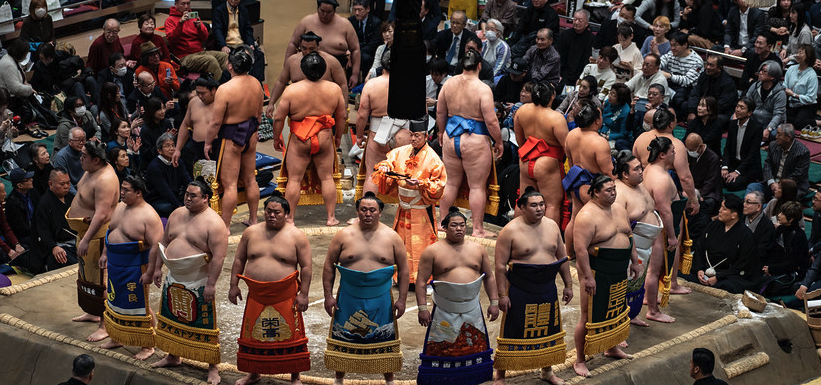
The jungyo, sumo’s travelling road show, spans 29 days across 27 locations, starting with ceremonial sumo at Ise Grand Shrine and ending in Saitama the week before the basho opens. Wrestlers pile onto buses, practice in borrowed gymnasiums, sleep communally, and take hundreds of bouts against each other with no rankings at stake and no Emperor’s Cup on the line. From the outside it looks like nothing more than exhibition sumo. But the jungyo is where you find out who is actually ready, who is managing something they haven’t disclosed, and who is doing the quiet work that doesn’t show up until Day 8 of the basho.

The 2026 Haru Jungyo ran from April 18 to April 26. The Natsu Basho opens May 10 at the Kokugikan. Here is what the tour revealed.

Twenty-Nine Days, One Yokozuna

As the sole yokozuna on the spring tour, Hoshoryu set the physical standard that everyone else measured themselves against across all 29 days. He led from the front, took the most bouts among the upper ranks, and gave the circuit whatever weight it had at the top.

At the April 19 stop in Utsunomiya, he took a tour-high 16 bouts, going 15-1. He called out Wakanosho, a local wrestler from Utsunomiya on the verge of his Makuuchi debut, for repeated practice bouts, going 7-1 against him. He also served as the receiving partner for butsukari-geiko, the punishing full-contact pushing drill, for several minutes, a gesture that drew sustained applause from the crowd. Hoshoryu said afterward he hadn’t known Wakanosho was local until he stepped onto the ring, but that if the fans were happy, that was enough.

By the final day in Iruma on April 26, with the 29-day circuit complete, Hoshoryu gave his end-of-tour assessment. With both Yokozuna Onosato and Ozeki Aonishiki having withdrawn from the tour due to injury, he had carried the top of the division alone. “Above all I’m glad to have finished safely without injury,” he told reporters, per Kyodo ( via Tokyo Shimbun and Okinawa Times). “My physical reactions were good. I’ll prepare for the Natsu Basho.” For a yokozuna heading into his first title shot of the year, that is a clean bill of health delivered in the most understated register possible.

Kirishima At 30

On April 24 in Saitama, Ozeki Kirishima turned 30 and spent the morning taking 14 practice bouts, going 4-4 in eight consecutive bouts against Hoshoryu, who called him out. The two men trained in the same Mongolian judo dojo as children, a fact that gives their matchups a texture that most jungyo bouts don’t carry.

“This is my best age,” Kirishima told reporters, per Daily Sports (Kyodo). “I think there’s still more strength to come.” The session with Hoshoryu was unplanned: “My body was moving well. I’ll carry this into the next tournament.”

He returns to Ozeki after exactly two years away, a rank he lost to injury and clawed back through three consecutive positive-record tournaments. The mentor who originally bore the name Kirishima reached Ozeki at 31. The current Kirishima is 30, back at the rank, and by his own account feeling the sharpest he has in years. The reporters covering the tour noted he received a cake from the press pool for his birthday. He was photographed holding it, smiling. It is a small detail about a man at the top of his institution, two years after being forced out of it, visibly at ease.

Ura, patiently

Over 24 days of the tour, excluding two days of ceremonial sumo, Ura did not miss a single moshiai session, according to tour staff (Kyodo via Shimotsuke Shimbun and Akita Sakigake). He is 33, has lost 22 of his last 31 matches, and spent every available practice session on the dohyo anyway.

At the April 23 stop in Fuchu, Tokyo, he took 18 bouts against Atamifuji and others, using a shoulder throw to send the younger wrestler tumbling, his technical precision intact even as his record over the past two tournaments tells a different story.

He explained his tour routine to reporters: eight hours of sleep, up at 6am, two hours before departure. “I want to be wide awake and have my body moving by the time I arrive,” he said. “But I don’t want to be a slave to routine. I want to stay flexible.” His quote on the practice itself was simpler: “I am grateful just to be able to practice.”

Someone in comfortable form doesn’t talk about being grateful just to practice. Ura knows exactly where he is, and he’s decided to work through it rather than around it. Whether that produces a comeback at Natsu Basho or a quiet slide further down the rankings, the effort is real and the tour made that visible.

Asanoyama, deliberate

Former Ozeki Asanoyama spent the first portion of the tour on basic conditioning before joining moshiai on April 20 in Ibaraki, finishing his first competitive session 8-4 and working primarily on left overarm grip and strong initial contact. 

By April 21 in Adachi, Tokyo, he was taking bouts against Atamifuji and others, finishing 8-4 over 12 bouts. He practiced without a supporter on his chronically injured left knee, taping only. Of Atamifuji he said: “He’s getting heavier. Practicing with Sanyaku wrestlers is good, and working with younger wrestlers will change me,” per Daily Sports. His goal for Natsu Basho was direct: “I haven’t managed double-digit wins since returning to Makuuchi. That’s the number one target. My starts are always bad — I want to fix that,” per the same report.

He has finished with a winning record in two consecutive tournaments since returning to Makuuchi and wants to be back in Sanyaku by year end. The tour suggested that ambition is grounded in something real.

The newcomer

Fujiryoga, newly promoted to Makuuchi and on his first jungyo, spent April 22 in Ota, Tokyo, throwing himself at Ozeki Kirishima for two minutes of butsukari-geiko, repeatedly driven to his knees, back covered in dirt. “It’s a luxury for a newcomer like me,” he said. “It’s tough, but I’m nothing but grateful. I want to reach a level where I can compete equally with Yokozuna and Ozeki soon,” per Nikkan Sports.

His mentor, Fujishima oyakata, the former Ozeki Musoyama, arrived partway through and watched from ringside. Fujiryoga said he felt “a little mentally fatigued” compared to usual, but added: “He is someone who embodied the powerful pushing sumo I aspire to. Since he came to watch, I wanted to show him good sumo.” His mentor had come to watch, and he wanted to show him something worth seeing.  In sumo, that’s not insignificant.

What it means for May 10

The banzuke was published April 27. Hoshoryu and Onosato hold the Yokozuna positions, though Onosato sat out the spring tour managing an injury and has not won a title in three tournaments. Kirishima returns to Ozeki. Two Ozeki are carrying physical damage into the basho. The new Sekiwake slots belong to Atamifuji and Kotoshoho, the former the first wrestler from Shizuoka Prefecture to hold that rank in 96 years, the latter among the ten slowest climbers to Sekiwake in recorded history.

The tour did not resolve the title race but it did clarify the physical inventory. Hoshoryu is fit and has been working at full load for 29 days. Kirishima is sharp and apparently unbothered by the occasion of turning 30. Asanoyama is moving without the knee brace and thinking about Day 1. Ura took every available practice bout and is due for something to break his way.

The Natsu Basho opens May 10. The Emperor’s Cup is open.


All sources used in this piece are linked inline. All Kyodo wire quotes are attributed to the regional papers that carried the wire report, as the originating Kyodo dispatches are not separately accessible without a subscription. Where articles are behind paywalls, the link is provided for reference and attribution purposes.